Early in my career, I was proud of how fast I could close a ticket. Disk full? Give me fifteen minutes. I had a routine: scan the drive, identify the obvious waste — temp files, duplicate installers, ancient downloads — propose a cleanup to the user, get the thumbs-up, and execute. Clean, efficient, repeatable. I genuinely thought I was good at this.
Then came Sevda Hanım.
The Setup
The ticket was textbook. Her workstation’s C: drive was sitting at 97% capacity, and Windows was starting to throw those passive-aggressive low-disk-space balloons at her every ten minutes. I walked over, introduced myself, had a quick look at the drive, and spotted the usual suspects: a Downloads folder that hadn’t been curated since approximately 2009, a graveyard of installer packages, and — the big one — a Recycle Bin holding about 4 GB of deleted files.
I turned to her and said something like, “There’s quite a bit of junk here. If it’s okay with you, I can clear all of this out and free up around 6 GB. Sound good?”
She looked at her screen, looked at me, and said, “Yes, go ahead.”
Those four words. I can still hear them.
I did what I said I would do. Downloads folder — cleared. Old installers — gone. Recycle Bin — emptied. Job done in under ten minutes. I closed the ticket, wrote a tidy little note in the log about recovered space, and went back to my desk feeling like a professional.
The Phone Call
About forty minutes later, my manager appeared at my desk. Not over the phone — physically at my desk, which is never a good sign.
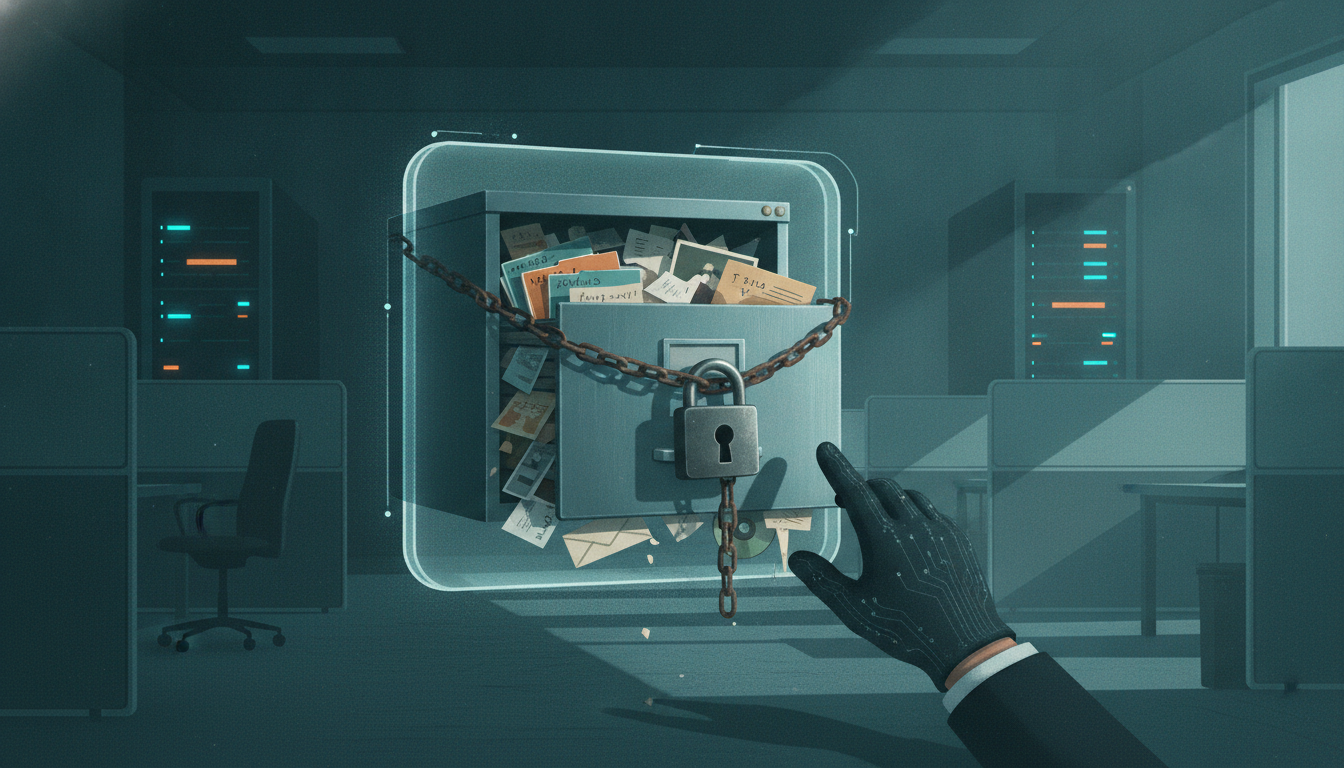
Apparently Sevda Hanım had been using her Recycle Bin as a filing system.
I want you to sit with that sentence for a moment.
She had files in there — real, important-to-her files — that she had “deleted” from her desktop to keep them out of sight, but had never actually intended to remove permanently. The Recycle Bin was, in her mental model, a kind of private folder. A discreet drawer. A place where things went to be hidden, not destroyed.
Was it the most orthodox approach to file management? No. Was it entirely her fault for not understanding how the Recycle Bin works? Also no — not entirely. Because here is the thing I had to accept that afternoon: I never told her that emptying the Recycle Bin was part of the plan. I said “junk.” I said “clear all of this out.” I did not say “including the files you previously deleted, which will be permanently and irrecoverably removed.”
She heard “tidying up.” I executed a one-way trip to nowhere.
The Complaint
She reported me to my manager for deleting her files without permission. And honestly? She was not wrong to do it. She had given me a yes, but I had never given her enough information to make that yes meaningful. That is not her failure. That is mine.
My manager was fair about it — after I explained the situation, we talked it through and I did not face any formal consequences. But the conversation was uncomfortable enough, and the look on my manager’s face uncomfortable enough, that I have never forgotten it. Some lessons arrive gently. This one did not.
We tried recovery tools. We got some files back, not all of them. The ones that mattered most to her were, of course, the ones that were gone. That is just how these things go.
What I Changed
From that day forward, before any disk cleanup — and I mean any, even the ones that feel trivially obvious — I say a specific sentence out loud to the user. I say it slowly. Sometimes I even write it down in the ticket thread so there is a record:
“This will also empty the Recycle Bin. Once I do this, there is no undo — anything in there will be permanently deleted. Is there anything in your Recycle Bin you still need?”
It takes about eight seconds to say. It has saved me from repeating that afternoon more times than I can count. I have had users say, “Oh wait, actually yes, hold on” — and then fish out something they needed. Real files. Files they would have lost forever if I had just steamrolled ahead with my efficient little routine.
The sentence works because it does three things at once:
- It names the specific action clearly (emptying the Recycle Bin, not just “cleaning up”).
- It explains the consequence in plain language (permanent, no undo).
- It gives the user a real opportunity to reconsider — not a rhetorical “okay?” at the end of a long explanation, but an actual question that invites a different answer.
That third one is the part most of us skip. We explain the action, we mention the consequence in a mumble, and then we phrase the confirmation in a way that makes “no” feel rude or unnecessary. “All good? Great.” That is not informed consent. That is social engineering in the wrong direction.
The Broader Lesson
I think about this story whenever I catch myself moving too fast on a user’s machine. The Recycle Bin incident was my most embarrassing example, but the same trap exists everywhere in IT support: the browser cache you cleared that had saved form data they needed, the startup items you disabled that included their VPN autolaunch, the Windows Update you rescheduled that they had deliberately timed around a business trip.
Users do not know what we know. They do not think about their computer the way we do. And that is completely fine — it is why they called us. But it means the gap between what they think they agreed to and what we actually do can be enormous, even when we said exactly what we planned to do. The words we use come loaded with our own technical understanding, and we forget to unload them before handing them to someone else.
Getting a yes is easy. Getting an informed yes takes an extra thirty seconds. The math on which one is worth doing is, I promise you, very simple.
One More Thing
Years later I ran into a junior technician on my team making the exact same move — disk cleanup, user nodding along, hand hovering over the “Empty Recycle Bin” option. I stopped him before he clicked. Told him to say the sentence first.
The user paused. Then said, “Oh — actually, can you check if there is a file called ‘sozlesme’ in there? My manager might need it.”
There was. Contract document, recently deleted by accident.
The technician looked at me like I had just done something impressive. I had not. I had just made a mistake twenty years earlier so he did not have to.
That is more or less what experience is.